
Things That Surprise People Moving to San Antonio | Relocation Guide
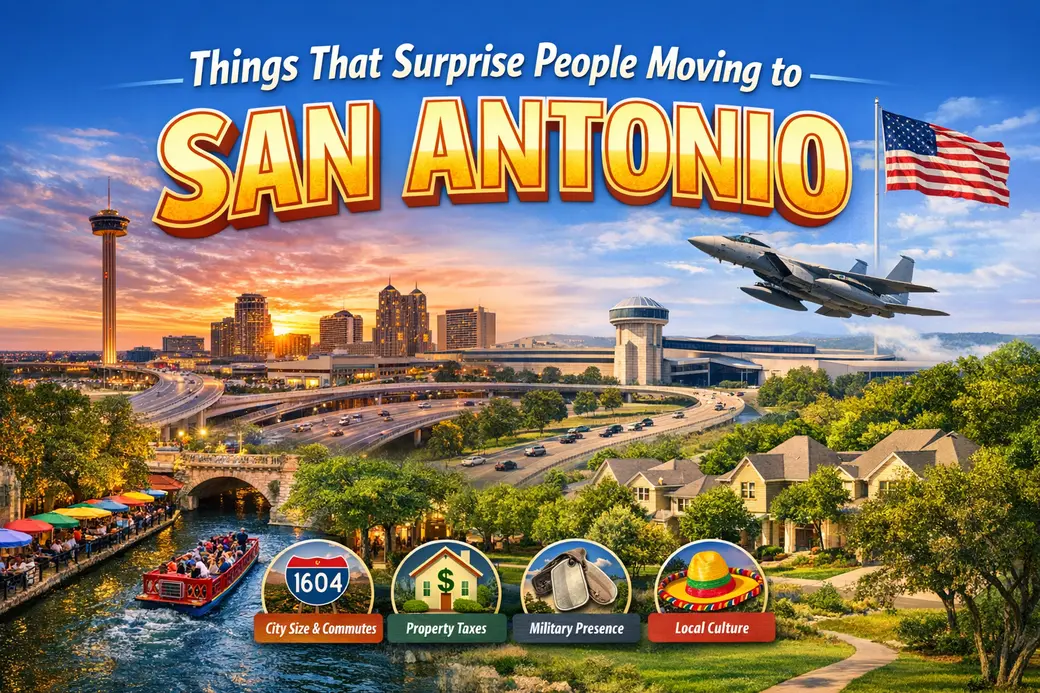
Things That Surprise People Moving to San Antonio
Every year thousands of families relocate to San Antonio, Texas for military assignments, job opportunities, and lifestyle changes. Many start their research online and feel like they understand the city before they arrive.
But once people actually move here, a few things almost always catch them off guard.
As an Air Force veteran and San Antonio Realtor in the top 1% of agents, I’ve helped hundreds of families relocate to the area. These are the things clients consistently say surprised them most after arriving.
Understanding these early can help you choose the right neighborhood, set realistic expectations, and enjoy the transition much more smoothly.
- San Antonio Is Much Larger Than People Expect
San Antonio is one of the largest cities in the United States by land area, covering more than 500 square miles.
That size creates a few realities newcomers do not expect.
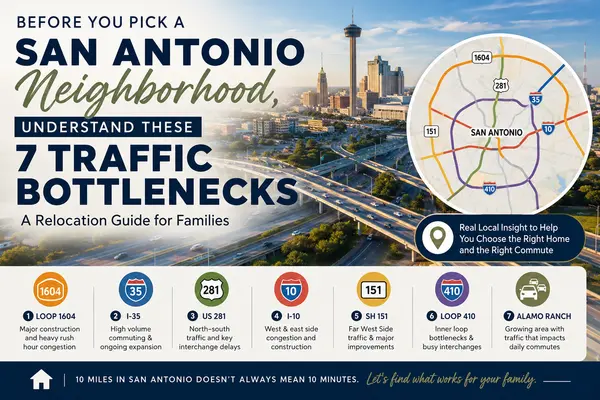
Two neighborhoods that look close on a map may be 30 to 45 minutes apart in real driving time. Travel patterns depend heavily on highway loops such as:
- Loop 1604
• Loop 410
• Highway 281
• I 35 and I 10 corridors
Many relocating families initially search for homes based on mileage from base or work, but commute time in San Antonio is much more about traffic flow and highway access.
For example, a 20 mile commute could be faster than a 10 mile commute depending on the route.
This is why relocation tours and route planning are so important when choosing where to live.
- Property Tax Rates Can Vary More Than Expected
One of the biggest financial surprises for relocating families is how property taxes work in Texas.
Texas does not have a state income tax, which means property taxes fund many local services including schools, infrastructure, and emergency services.
Because of that, tax rates vary significantly depending on the location.
Two homes with the same price can have very different monthly payments simply because they sit in different tax jurisdictions.
Common factors that affect the rate include:
- School district
• Municipal vs unincorporated areas
• Special districts such as MUD or PID communities
Many buyers moving from other states are surprised that property taxes can range roughly from 1.7% to 2.7% or more depending on the area.
Understanding this early helps buyers avoid surprises when calculating their monthly housing budget.
- The Military Presence Shapes the City
San Antonio is often called Military City USA, and many newcomers are surprised by how much the military influences the city.
The region is home to several major installations including:
- Randolph Air Force Base
• Fort Sam Houston
• Lackland Air Force Base
Because of this, the city has a strong military culture and many neighborhoods have a high concentration of active duty and veteran families.
For relocating military families this often becomes a huge benefit. Schools, local businesses, and community organizations are very familiar with the PCS lifestyle.
- Neighborhoods Feel Like Separate Small Cities
Another common surprise is how different areas of San Antonio feel from one another.
Unlike some cities with a single central urban core, San Antonio developed outward through multiple suburban hubs.
For example:
- The north side tends to have newer master planned communities and highly rated school districts
• The northwest side has fast growing areas like Alamo Ranch with extensive shopping and dining
• The northeast corridor near Randolph has strong military communities and established neighborhoods
• The central city offers historic homes and proximity to downtown
Because of this structure, choosing the right area often matters more than choosing the specific house.
Lifestyle differences between neighborhoods can affect:
- Commute time
• School options
• Access to shopping and restaurants
• Future resale demand
- Summers Are Hot, But The City Is Built For It
Yes, the summer heat is real.
Temperatures frequently reach the upper 90s, and triple digit days are not unusual in July and August.
What surprises many newcomers, however, is how well the city adapts to the climate.
San Antonio lifestyle revolves around:
- Early morning outdoor activities
• Evening dining and social events
• Shade filled parks and trails
• River Walk areas designed for cooling breezes
Many homes also feature large covered patios and outdoor living spaces designed specifically for Texas summers.
- The Culture and Community Events Are Everywhere
One of the best surprises for many newcomers is how strong the city’s culture and traditions are.
San Antonio blends Texan, Mexican, and military heritage, which creates a very unique community identity.
Events happen year round, including:
- Fiesta San Antonio
• San Antonio Stock Show & Rodeo
• Día de los Muertos at the San Antonio River Walk
These traditions give the city a strong sense of identity and help new residents feel connected quickly.
What Relocating Families Should Know Before Moving
Relocating to San Antonio can be an exciting opportunity, but the key to a smooth transition is understanding the city before choosing where to live.
The size of the city, the tax structure, and the neighborhood differences can all influence which areas make the most sense for your lifestyle.
I families navigate these decisions is one of my favorite parts of the job. Having personally experienced multiple military moves, I understand how important it is to find the right home and community the first time.
If you are planning a move to San Antonio, I’m always happy to help you explore neighborhoods, understand commute patterns, and make sure your home purchase also makes sense for long term resaleCategories
Recent Posts



"Molly's job is to find and attract mastery-based agents to the office, protect the culture, and make sure everyone is happy! "